
A seller in Plano once told me her living room looked “like a furniture showroom nobody lived in.” She meant it as a compliment to her stager. Buyers agreed, and the house went under contract fast. Sellers chase that promise when they decide to stage a house, and the price tag ranges wider in Texas than almost any decision you’ll make before listing.
Is It Worth It to Stage a House Before Selling in Texas?
I’ve watched empty four-bedroom houses in Katy sit for months without a single second showing. Then the owner rented furniture and art, relisted with fresh photos, and had competing offers within weeks.
That swing isn’t magic. It’s about buyers being terrible at imagining scale in an empty room. The National Association of Realtors asked buyers’ agents about this in its 2025 Profile of Home Staging. Of those agents, 83 percent said staging made it easier for shoppers to picture a property as their future home. You can read the summary yourself at nar.realtor.
Shoppers have more to choose from this year, which raises the stakes. Texas Realtors put the statewide median at $333,628 in the third quarter of 2026, down 0.4 percent, while active listings rose 2.8 percent. In Houston, HAR reported that single-family homes took an average of 59 days to sell in October 2026.
One homeowner I bought from was three months behind on the mortgage, with an auction date already circled on the kitchen calendar. Her garage still held her sewing machines and about forty years of Christmas decorations. Staging wasn’t the answer there since speed was, so we closed before the sale date hit.
Whether you should stage a house in Texas comes down to whether you’ve got time to wait for the payoff. If you’re current on payments and your house competes against new builds in Frisco or Leander, staging earns its keep. With a deadline bearing down, the money is better spent elsewhere.
Layout is the other test. A weird bonus room, a long narrow living area, an awkward formal dining space: those rooms sell badly empty and well furnished.
How Much Does It Cost to Stage a House in Texas?
Your number depends on how much furniture is already in the building. In Dallas, a design consultation alone commonly runs $300 to $600, before a single rented sofa shows up.
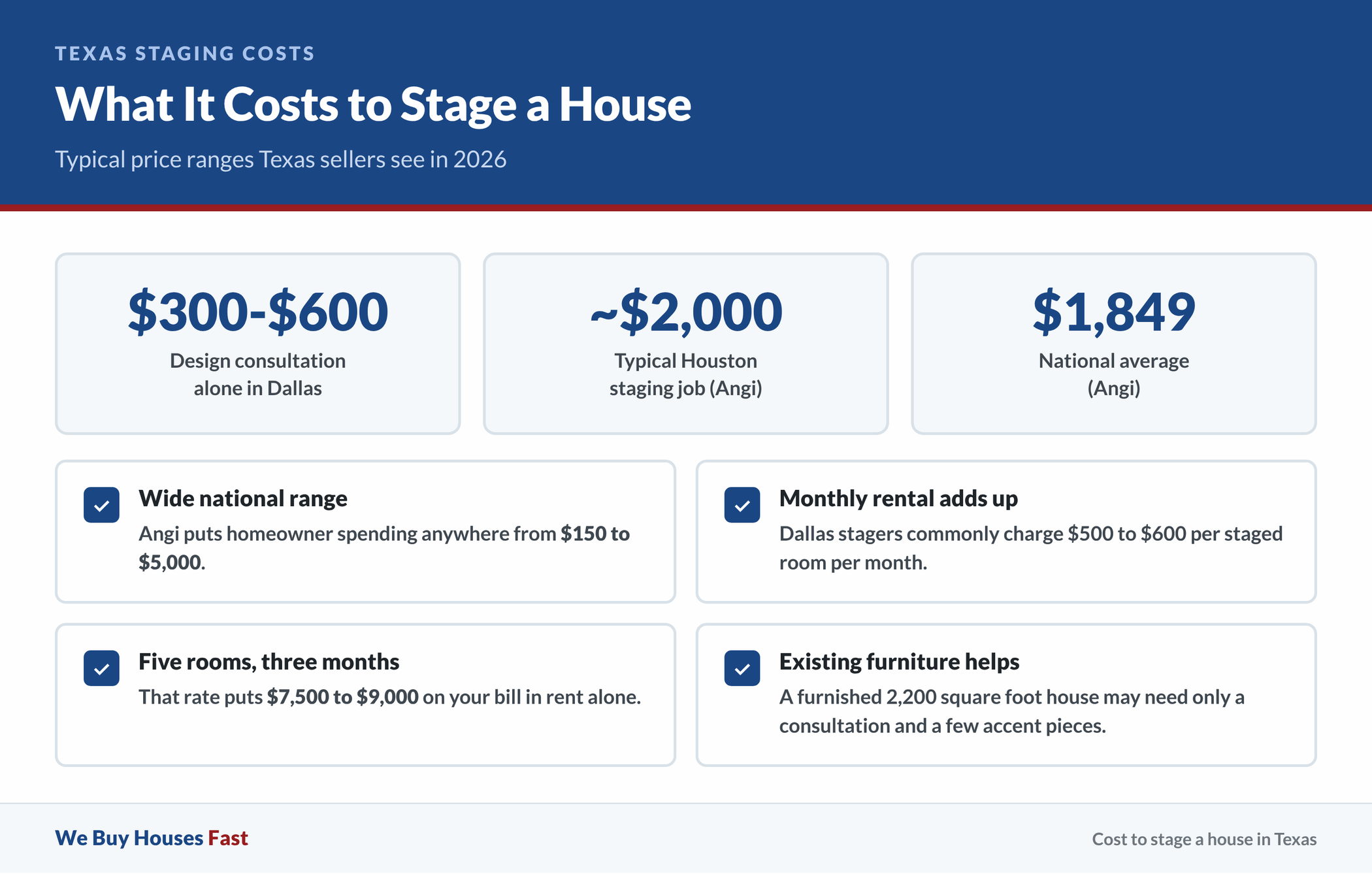
Pricing in Texas sits below coastal markets, which is good news for your wallet. Angi’s city data puts a typical Houston staging job around $2,000, half its Los Angeles figure. Nationally, Angi puts the average at $1,849, with homeowners spending anywhere from $150 to $5,000. I’ve seen quotes outside that band on both ends.
Most Texas sellers I talk to land somewhere in the middle. A 2,200 square foot house in Pflugerville with existing furniture might need a consultation plus a few rented accent pieces. The bill stays far below a full package.
Monthly rental is the part that quietly grows on you. Dallas stagers commonly charge $500 to $600 per month for each staged room, on top of that consultation. Five rooms for three months at that rate puts $7,500 to $9,000 on your staging bill in rent alone.
Listings in Texas aren’t moving as quickly as they did in 2021, and a staging bill that renews monthly can outlive your patience. I’ve watched sellers pull furniture out at the ninety-day mark purely to stop the bleeding. They end up with an empty house and worse photos than when they started.
Budget the whole runway, not the first month. This single habit saves more money than any discount you’ll negotiate upfront.
What Factors Affect the Cost to Stage a House in Texas?
Most of the staging cost comes down to square footage. Staging a 1,400 square foot bungalow in the Heights and a 3,800 square foot house in Southlake takes different truckloads, crews and hours, so they aren’t close to the same job.
Room count drives the rest, since every staged room adds its own monthly rental line. NAR found the living room, primary bedroom and dining room were the rooms agents staged most. I’d recommend exactly that triage to anyone watching their budget in Texas.
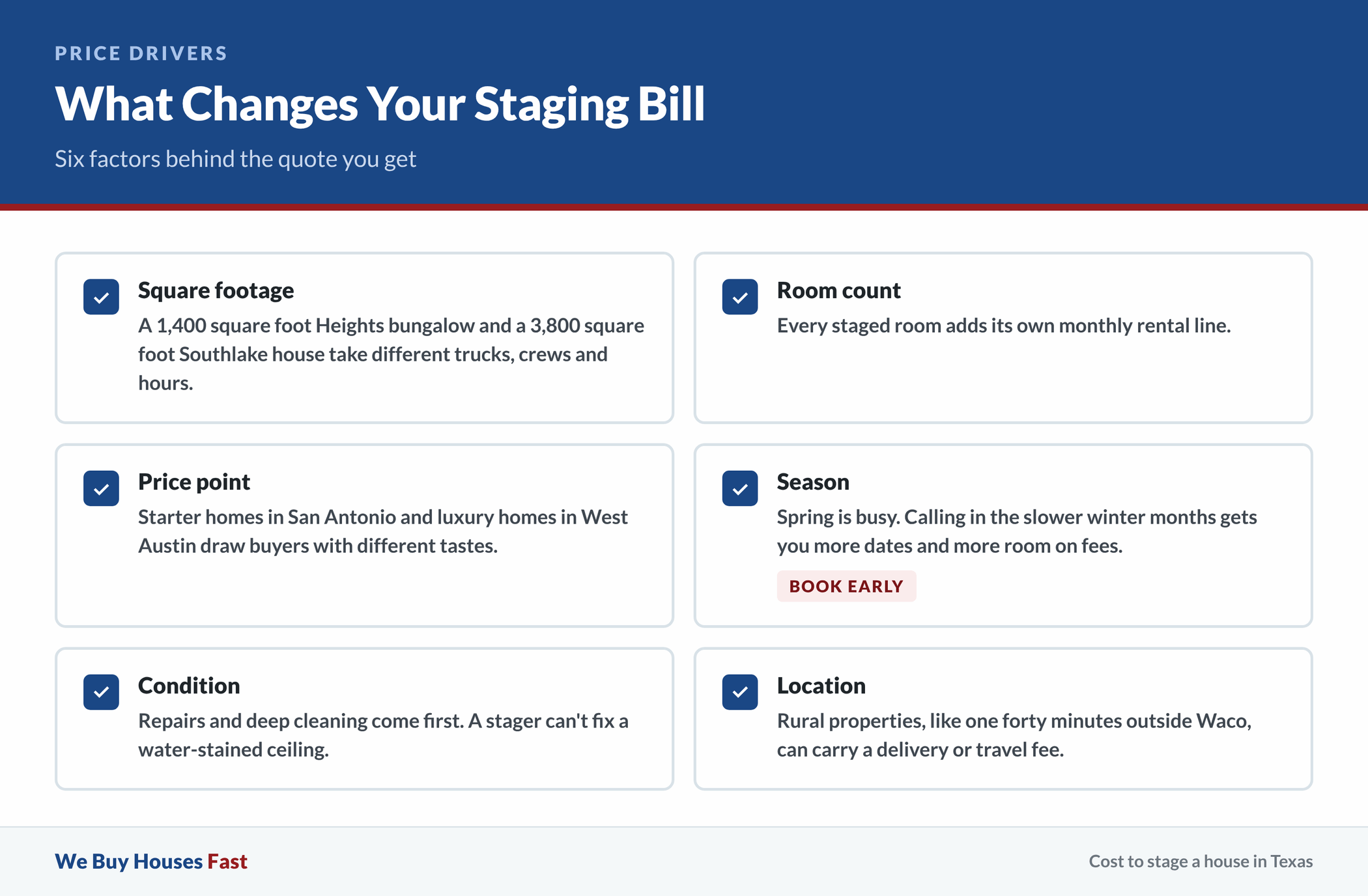
Your price point shifts the math too. Starter homes in San Antonio and luxury homes in West Austin draw different buyers with different tastes in décor and finishes.
People credit season less than it matters here. Spring is the busy season for Texas listings, so stagers in Austin and Houston fill their calendars early. Calling in the slower winter months gives you more choice of dates and more room to talk about fees.
Then there’s condition. A home stager can’t fix a water-stained ceiling or a kitchen with three different countertop materials. Spend the first money on repairs and deep cleaning. Decluttering and cleaning topped the list of agent recommendations in that same report, ahead of everything else, and both cost far less than furniture rental.
Access and travel add real expense in rural stretches of Texas. If your property sits forty minutes outside Waco, ask whether the stager adds a delivery or travel fee.
Do You Pay More to Stage a Vacant House in Texas?
An empty house sounds cheaper to stage, since there’s nothing to work around and no family tripping over the photographer. The invoice says otherwise, and by a wide margin.
When you stage a house that’s sitting vacant, every single object gets rented and trucked in. HomeGuide puts vacant staging at $3,000 to $6,000 and up, with furniture rental as the single most expensive piece. Occupied staging, which works around your own furniture, usually runs $1,000 to $3,000.
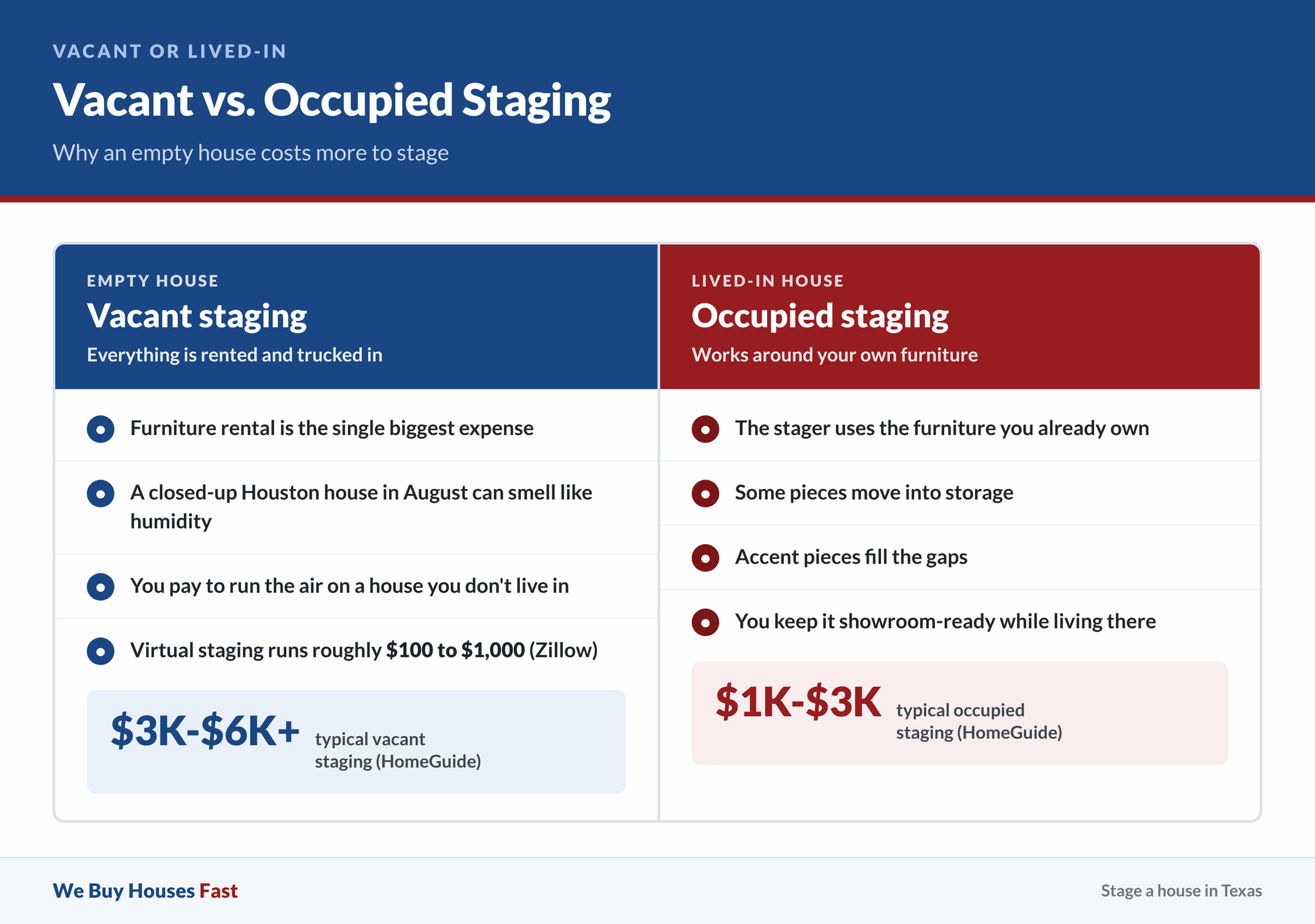
Vacant houses also show worse in our climate. A closed-up house in Houston in August can start to smell like humidity, and buyers notice that before they notice the crown molding. You’ll want the air running anyway, which means paying a summer electric bill on a house you don’t live in.
Landlords with recently vacated rentals face this constantly across Texas.
Virtual staging is the honest alternative for empty properties, and I’ll disagree with the agents who dismiss it. Zillow puts digital staging at roughly $100 to $1,000, and for a vacant house that mostly needs to win the online click, it does the job. Online pictures are the first showing most people ever get. Just make sure your real estate agent labels the images as virtual, since misleading photos damage trust the moment someone walks in.
Some sellers skip staging entirely on vacant properties and sell direct instead. We Buy Houses Fast buys North Texas houses in their current condition, which takes the furniture question off the table.
How Much Do Professional Stagers Charge in Texas?
Ask three firms for a price and you may hear three different billing models.
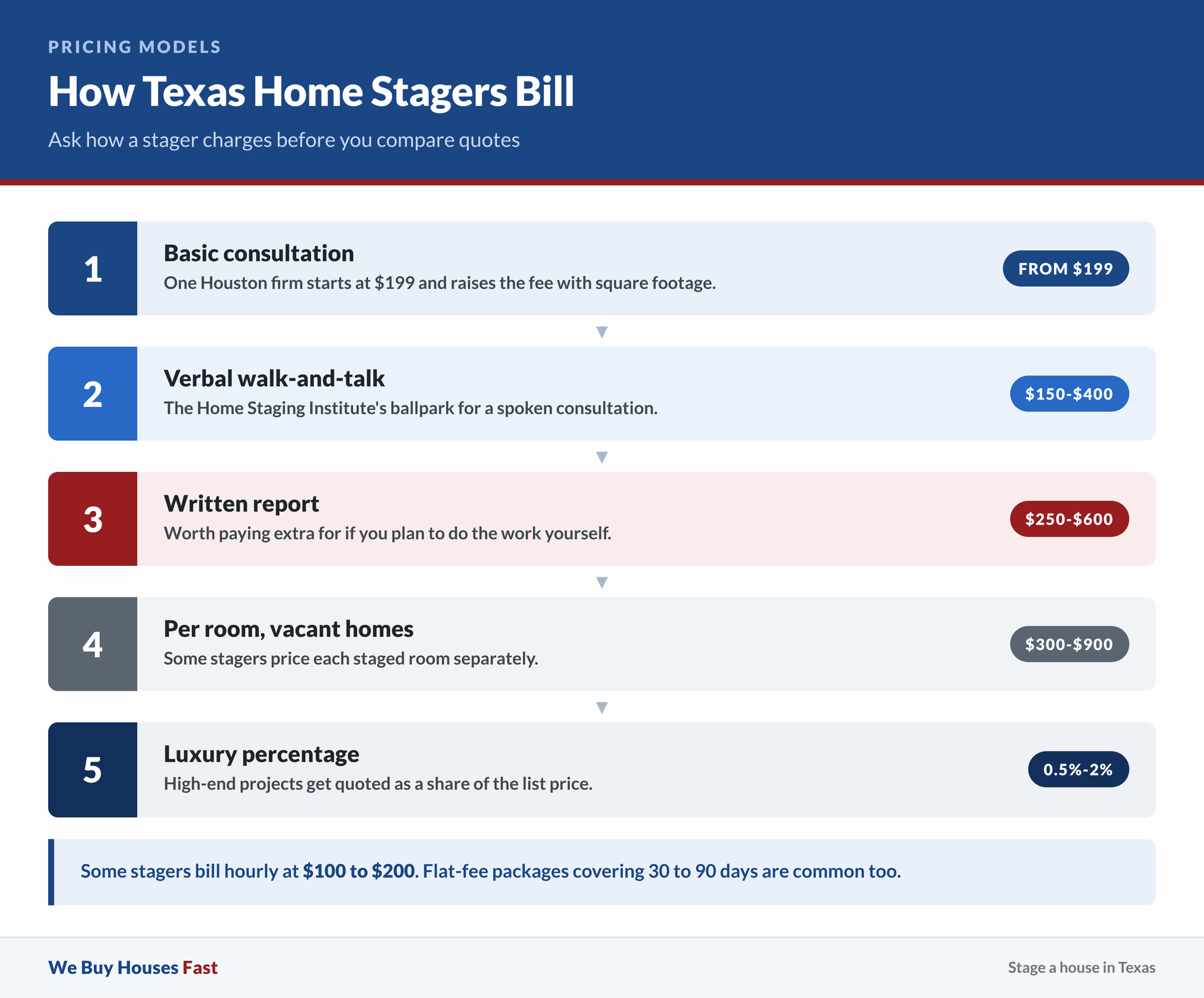
Entry-level pricing starts with a basic consultation. One Houston staging firm starts its consultations at $199 and raises the fee with square footage. The Home Staging Institute’s ballpark puts a verbal walk-and-talk at $150 to $400 and a written report at $250 to $600. Paying extra for the written version makes sense if you plan to do the work yourself.
Pricing structures differ from one home stager to the next, so ask a few how they bill before you assume one number applies across the board. Some bill hourly at $100 to $200, others charge per room in the $300 to $900 range for vacant homes. Luxury projects get quoted as a percentage of list price, usually half a percent to two percent. Flat-fee full-service packages covering 30 to 90 days are another common setup.
One room gets shortchanged more than any other, and it’s the primary bedroom. Sellers pour money into the living room and leave the bedroom with a bare mattress, then wonder why buyers rush through the back half of the house.
It’s worth asking whether a stager owns its inventory or rents it from someone else. Firms that keep their own warehouse and trucks have fewer middlemen to pay, and that can show up in the quote.
No amount of furniture overcomes a number that’s twenty grand too high. Fix the price first, then decide whether to stage a house at all.
Should You Stage a House Yourself or Hire a Pro in Texas?
A retired teacher in Corpus Christi spent two weekends rearranging her own furniture after watching a stack of staging videos. Her photos looked fine, her house sold, and she kept the whole staging fee in her pocket.
If you stage a house yourself with your own pieces, you save most of the occupied staging fee covered above. Buy a few throw pillows, pull down the family photos, open every blind.
Hiring out makes sense when the house is empty, oversized, or dated.
NAR’s 2025 data showed a median of $1,500 when sellers used a staging service. When the listing agent staged the home personally, the median was about a third of that. Plenty of Texas real estate agents include light staging in their service, so ask before you hire anyone.
My opinion, and some Realtors will disagree: most occupied Texas homes under $400,000 don’t need a paid home stager. They need the garage cleared, the countertops bare, and the dog crate out of the dining room. That’s labor, not design.
Above roughly $600,000, the calculation flips. Buyers at that level in Texas compare your house against professionally decorated builder model homes in Prosper and Dripping Springs. Competing without help is a tall order.
Picture your living room next to one of those models. If nothing looks out of place, you’ve got the balance right.
Can You Stage a House in Texas on a Budget?
What changes a listing is light, space, and cleanliness. Those three cost almost nothing. Replace every bulb in the house with the same color temperature, open the curtains on a bright Texas morning, and your photos improve more than a rented sofa would deliver.
Focus your dollars on the first twelve feet past the front door.
For a low-budget plan in Texas, pay for one consultation and rent nothing. Spend a few hundred dollars at a home goods store on neutral bedding, two lamps, bath towels, and a rug. With the consultation fee covered earlier, your all-in might stay under a thousand.
Curb appeal gets less of the budget than it deserves. Fresh mulch, trimmed shrubs, and a pressure-washed driveway photograph beautifully. Improving curb appeal ranks among the top three recommendations agents make, cited by 77 percent of them.
Skip the rooms buyers don’t weight heavily. Guest bedrooms and kids’ rooms were the least commonly staged rooms in NAR’s survey, so a clean bed and clear floor is plenty.
Borrow before you buy. I’ve seen families stage a house in Texas using a neighbor’s patio set and their sister’s dining chairs, then return everything after closing. The photos don’t know where the furniture came from.
Frequently Asked Questions About Staging a House in Texas
Does Staging a House in Texas Guarantee a Faster Sale?
No, and anyone promising that is overselling. Staging helps buyers connect with a space, and roughly half of seller agents in NAR’s research saw staged listings spend less time on the market. Price, location, and condition still carry more weight than furniture. A well-staged house priced above the comps will sit right alongside the unstaged ones.
Can I Stage a House in Texas That Still Has People Living in It?
Absolutely, and occupied staging is the cheaper path. Your stager works with the furniture you already own, moves some of it into storage, and brings in accent pieces to fill gaps. The tradeoff is keeping the house showroom-ready while your family lives there, which wears thin after a few weeks of showings.
Is Virtual Staging Legal for Texas Listings?
Yes, provided the listing clearly discloses that the images are digitally altered. Buyers and their agents need to know the furniture isn’t real before they drive out. Texas MLSs expect virtually staged photos to be labeled, often with a watermark on the image itself. Rules change, so confirm the current one with your real estate agent or broker.
What If I Don’t Want to Stage a House at All?
That’s a legitimate choice, and plenty of Texas sellers make it. Selling as-is to a direct buyer skips staging, repairs, showings, and the monthly furniture rental. You’ll usually trade some sale price for speed and certainty, so run the numbers both ways and see which total serves your situation better.
How Far in Advance Should I Book a Home Stager in Texas?
A few weeks ahead of your target listing date is comfortable most of the year. Spring is tighter across Texas markets, so if you’re aiming for a March or April launch, start calling in January. Booking early also gives you time to finish decluttering and any small repairs before the crew shows up.
Not Sure Staging Is Worth It for Your House?
If you’re weighing whether to stage a house, list it, or just be done with the whole thing, I’m happy to walk through the numbers with you. Some folks hang up and go hire a stager, and that’s a fine outcome. Others find out a direct sale fits their situation better. Either way, you can reach us at We Buy Houses Fast for a straight conversation about what your house would bring as-is.
We’re glad to look at your house with you and weigh the cost to stage it against selling as-is. There’s no cost and no obligation either way. Reach out to We Buy Houses Fast or fill out the form below, and we’ll get back to you.